
Reviews
Description
Core Survival Loop
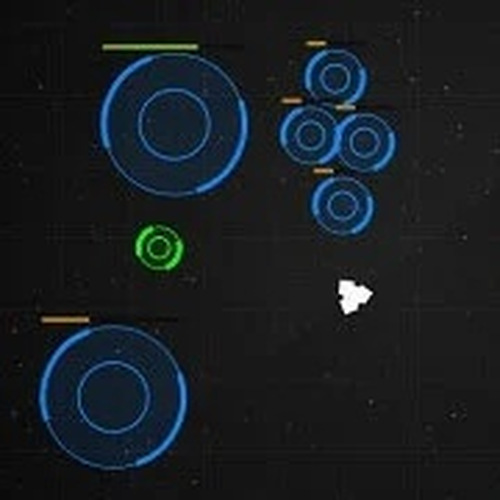
At its heart, this game presents a straightforward challenge: navigate a small spacecraft through an ever-changing field of obstacles. The action takes place on a single screen, with the player's ship moving freely in any direction. Obstacles appear from various angles, and their patterns grow more intricate as time passes. The primary feedback loop involves recognizing these patterns and reacting quickly. Each successful dodge brings a sense of accomplishment, while a collision sends the player back to the start, encouraging another attempt. This simple structure makes it easy to pick up and play for just a few minutes or for longer sessions.
Visual Clarity and Style
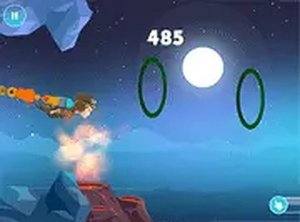
The game adopts a clean, cartoon-like art style that prioritizes readability. Obstacles and power-ups are rendered in bright, distinct colors, making them easy to spot against the starry background. The ship itself is small but clearly outlined, allowing players to track its position without strain. This visual approach ensures that the game remains accessible to players of all ages, including those who might be sensitive to more intense or realistic graphics. The overall presentation feels cheerful and inviting, which helps maintain a relaxed atmosphere even as the difficulty ramps up.
Power-Up Integration
Throughout each run, helpful items appear at regular intervals. These include temporary shields that allow the ship to pass through one obstacle unharmed, and speed boosts that provide a brief burst of movement. Collecting these items adds a layer of strategy: players must decide whether to risk moving toward a power-up or stay in a safer position. The timing of these items is designed to offer relief during particularly dense obstacle patterns, giving skilled players a chance to extend their run. However, relying too heavily on shields can lead to complacency, as they only last for a short duration.
Progression and Skill Development
There is no traditional level system or story mode. Instead, the game measures progress through the length of each survival attempt and any scoring system that may be included. As players practice, they naturally improve their reaction times and pattern recognition. The increasing complexity of obstacle arrangements ensures that there is always room for growth. Beginners might survive only a few seconds, while experienced players can last several minutes. This gradual skill curve makes the game rewarding for those who invest time in learning its nuances.
Accessibility and Controls
The controls are designed to be responsive and intuitive. Players can move the ship by tapping or dragging on the screen, depending on the device. There are no complex button combinations or menus to navigate. This simplicity allows anyone to start playing immediately without reading instructions. The game also accommodates different play styles: some players prefer small, precise movements, while others make larger sweeps across the screen. Both approaches can be effective, adding a personal touch to each playthrough.
Session Structure and Replay Value
Each attempt is self-contained, lasting anywhere from a few seconds to several minutes. There is no save system or checkpoint, which means every run starts from the beginning. This structure encourages players to focus on the present moment and try to beat their personal best. The random variation in obstacle patterns ensures that no two attempts feel exactly alike. This unpredictability, combined with the satisfaction of gradual improvement, gives the game strong replay value. It is particularly well-suited for short breaks or moments when a quick, engaging activity is desired.

Player Comments
Sign in to comment
You must be logged in before posting a review or rating.
No account? Create one
No comments yet. Be the first to comment!